
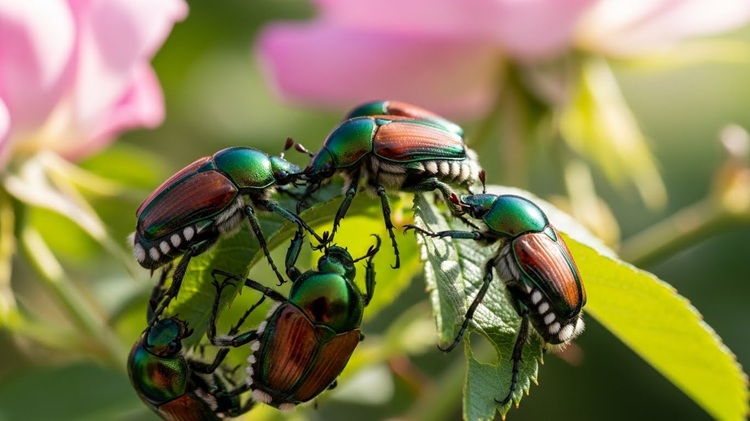

A serious pest is damaging yards across Berthoud, Colorado. This pest is the Japanese beetle. It is a non-native insect. These beetles do not belong here. They were first seen in the US in 1916.
In their home country, nature keeps them in check. Here, they have very few natural enemies. This lack of control causes huge population growth. Berthoud gardeners need to act quickly to protect their landscapes.
This widespread damage is severe. Taking the right steps now is very important. To learn more about local pest solutions, visiting a local expert like saelapest.com may be the next step needed for full protection.
Table of Contents
Identifying the Berthoud Plant Destroyer
You must know what you are looking for. The adult Japanese beetle is quite striking. It is small, measuring about half an inch long. It has a metallic green body.
Its wing covers are a shiny copper or bronze color. A key sign is the white fuzzy tufts of hair. These dots run down the sides of its body. Look closely for five tufts on each side.
The adult beetles fly during the summer. Peak activity is usually from July through August in Berthoud. They emerge from the soil to eat and mate. They feed on over 300 types of plants.
This includes many favorite Berthoud species. Roses, grapes, maples, and fruit trees are all at risk. They often gather in huge numbers. This group feeding causes the worst damage. They will totally strip a plant of its leaves.
The Pest’s Two-Stage Attack
This beetle causes damage in two life stages. First, the adult beetle eats the leaves. They perform what is called “skeletonizing.” This means they chew the soft tissue between the leaf veins.
The leaves then look like lace. They turn brown and die. Healthy, mature plants might survive this damage. However, flower and fruit yields will suffer greatly.
The second stage of damage comes from the larvae. These young insects are called grubs. The female beetles lay their eggs in the soil. They choose moist, well-watered lawn areas. This makes irrigated Berthoud lawns and parks a perfect nursery.
The grubs are C-shaped and white. They live underground and eat plant roots. They love the roots of grass. This root feeding causes large, brown, dead patches in your lawn. These patches of turf will easily roll back, like a loose rug.
If you see this in late summer, you likely have grubs. The grubs retreat deep into the soil for winter. They emerge in spring to feed again before becoming adult beetles.
Simple, Effective Control for Berthoud Residents
You must use a smart, integrated approach to control these pests. Avoid broad-spectrum chemical sprays. These products kill helpful insects. Beneficial insects, like the Winsome fly, naturally keep the beetles in check.
The simplest method is hand-picking. Go out in the early morning or evening. The beetles are slow when it is cool. Knock them off the plants into a bucket of soapy water. You can use fine mesh covers to protect plants, like roses.
For lawn damage, management starts with water. Avoid over-watering your lawn in mid-to-late summer. This reduces the places where females lay eggs. Mow your grass higher. This helps the grass stay healthier.
You can treat grubs specifically in mid-to-late summer. This is when they are small and close to the soil surface. Use targeted biological products. Nematodes, a type of microscopic worm, are a good option. They only attack the grubs.
Never move infested soil or plants. This is how the beetles spread to new Berthoud neighborhoods. The Japanese beetle is a serious long-term threat. Berthoud homeowners must stay vigilant. Early action is the best defense against this invasive insect.
Professionals like Saela Pest specialize in managing invasive species. They can offer customized treatment plans for the Berthoud area, so call them today!
